

Tools and providers
Part of How to procure digital PR outreach
Digital PR software procurement: a selection framework
A practical digital PR procurement framework for UK teams: define requirements, score software, test integrations and plan budgets, contracts and renewals.
What to take away
- Start from the decision you must defendwhat the tool does that your team cannot, and who signs it off.
- Treat the supplier's own dashboard as evidence of nothing. Ask for the underlying data and its refresh date.
- Score every shortlisted product against weighted criteria before you see a demo, not after.
- Check the contract exit terms before the trial ends, because migration cost is the real lock-in.
- Keep one owner for the renewal date and one for the data export routine.
Define the requirement before you look at tools
Separate the job from the job title
Digital PR software selection fails when the brief is a category, not a task. Write down the monthly output you need: a media list, a coverage report, a journalist contact record or a share-of-voice figure.
Then name the person who produces it today and how long that takes. A tool that saves four hours a month on a task nobody owns is not a saving.
Map each requirement to a frequency as well. A monthly share-of-voice report needs different data from a daily monitoring alert. Write the frequency beside the output, because it drives the price tier you land on.
Set the evidence bar early
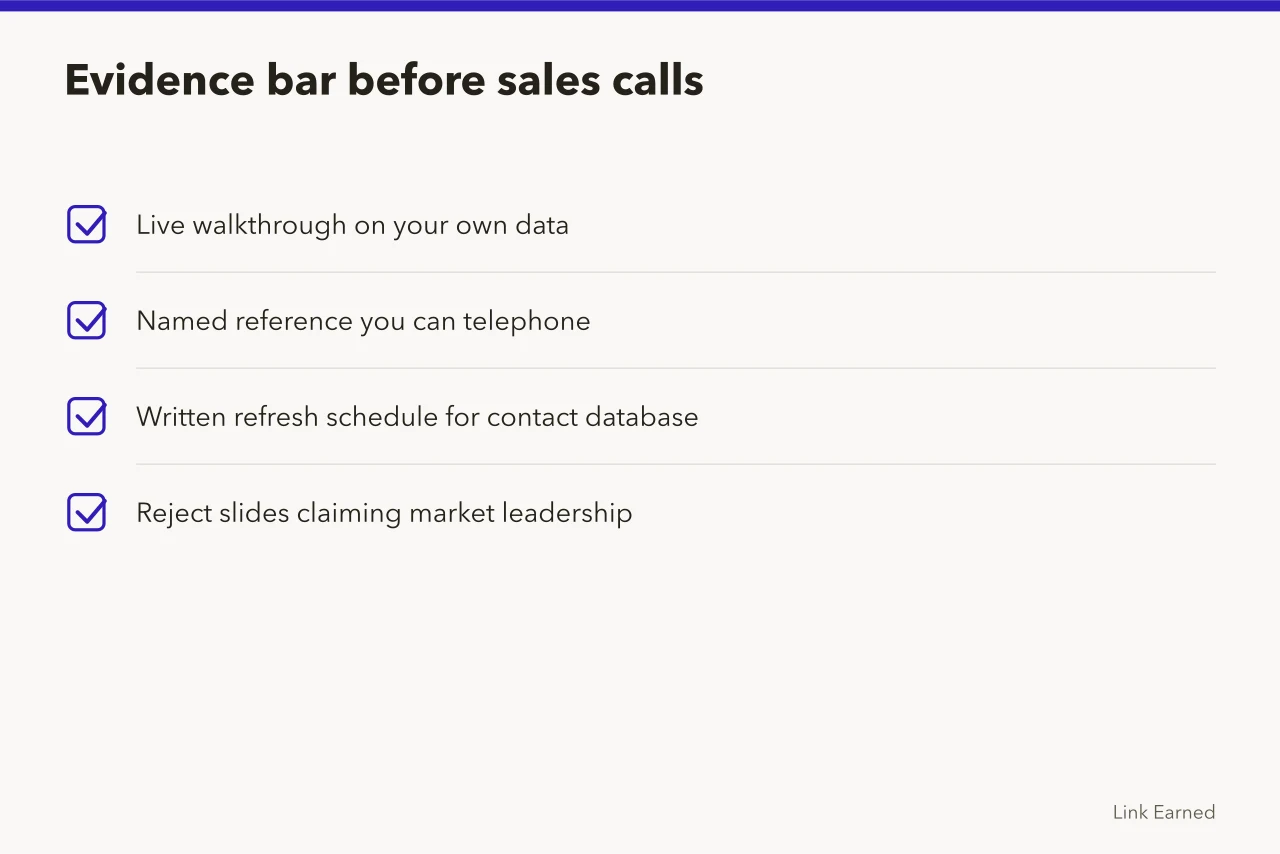
Decide what proof you will accept before any sales call. Reasonable evidence includes a live walkthrough on your own data, a named reference you can telephone, and a written refresh schedule for the contact database. Unreasonable evidence is a slide claiming market leadership.
The same discipline applies when you compare agencies rather than software, which is why the Digital PR supplier comparison in England sets out the questions to ask both kinds of vendor.
Score the shortlist on a rubric
Weight the criteria before scoring
Agree the weights as a team, then score. If you score first and weight later, the tool with the best demo wins. Coverage accuracy should carry the heaviest weight for outreach products, because a wrong contact list wastes the hours the tool was bought to save.
Scoring rubric: 5 versus 1
Criterion
- Coverage accuracy
- 25%
- Data export
- 20%
- Reporting fit
- 20%
- Integration
- 15%
- Contract terms
- 10%
- Support
- 10%
Weight
- Coverage accuracy
- Verified within 90 days
- Data export
- Full API or CSV export
- Reporting fit
- Client-ready in your template
- Integration
- Works with CRM and analytics
- Contract terms
- Monthly rolling after year one
- Support
- Named contact, response time
What a 5 looks like
- Coverage accuracy
- Stale, no refresh date
- Data export
- Screenshots only
- Reporting fit
- Fixed dashboard
- Integration
- Manual re-entry
- Contract terms
- Annual lock-in
- Support
- Ticket queue, no SLA
What a 1 looks like
- Coverage accuracy
- Data export
- Reporting fit
- Integration
- Contract terms
- Support
Keep the rubric to six criteria or fewer. A longer list dilutes the weights and turns the meeting into an argument about scores. Circulate the blank rubric to shortlisted vendors so their written answers come back in a comparable shape.
| Criterion | Weight | What a 5 looks like | What a 1 looks like |
|---|---|---|---|
| Coverage accuracy | 25% | Named outlets match your sector, verified within 90 days | Stale list, no refresh date given |
| Data export | 20% | Full export by API or CSV, no field limits | Screenshots only, export behind a higher tier |
| Reporting fit | 20% | Client-ready report in your own template | Fixed dashboard, no branding control |
| Integration | 15% | Works with your CRM and analytics stack | Manual re-entry for every campaign |
| Contract terms | 10% | Monthly rolling after year one, data yours on exit | Annual lock-in, no exit clause |
| Support | 10% | Named contact, response time in writing | Ticket queue, no service level |
Test the integration claim
Ask the vendor to push one record into your CRM during the trial. Many products advertise integrations that only work on an enterprise tier.
If your team already runs paid campaigns, the same plumbing questions apply there, and the IAB UK back to basics guide to programmatic is a useful primer on how data actually moves between platforms.
Where a tool also manages paid social, check its campaign structures against something like LinkedIn Campaign Manager, because a mismatch there creates manual work later.
Budget, contract and renewal
Price the whole term, not the seat
Add the seat cost, onboarding, any data add-on and the internal hours to migrate. For example, a team paying £400 a month for seats may spend a further £2,000 in staff time during the first quarter. Put that total against the hours saved and show the working.
First-quarter cost of ownership
- £400Monthly seat cost
- £2,000Staff time to migrate in Q1
- 13Month when introductory discount expires
Public sector buyers can also test whether a requirement fits an existing framework through the Digital Marketplace, which lists digital services including SEO.
Ask for the renewal price inside the contract, not in a covering email. Introductory discounts often expire quietly at month thirteen, and a quote that only covers year one hides that. Show the three-year total in the business case.
Own the exit before you sign
Ask for the export in the format you will need on the day you leave. Confirm in writing who owns the enriched contact data your team has added. Diary the renewal notice date at signature, not at renewal.
If the wider stack is still being chosen, the Digital PR: tools and supplier guide for 2027 shows how each category fits together and where overlap creeps in.
Common questions
How long should a digital PR software trial run?
Long enough to cover one full reporting cycle, which is usually four to six weeks. A two-week trial tests the interface, not the data.
Who should sign off the purchase?
The person accountable for the output the tool produces, plus whoever owns the budget line. Keep the technical reviewer separate from the budget holder.
What if two products score the same?
Choose the one with the cleaner export and the shorter notice period. Exit cost is the tiebreaker, not the demo.
Do we need software at all at this stage?
If one person can produce the output in a spreadsheet within the hours available, buy nothing yet. Revisit when the volume doubles.